What to Include in a Teacher Portfolio (That Actually Helps You Get Hired)
Most teachers assume a portfolio is just a place to dump:
→ lesson plans
→ classroom photos
→ certificates
→ student work
→ professional development
So they end up building portfolios that look polished, but don't actually say much.
A strong portfolio is not supposed to prove you've been busy.
It's supposed to reinforce your hiring story with visible evidence.
Do you even need a teaching portfolio?
Technically? Not always.
There are definitely schools that will hire teachers without ever asking for one.
But strategically, portfolios are becoming more useful, especially when:
- the market is competitive
- you're newer to teaching
- you're transitioning roles
- you're applying to schools with strong culture or instructional expectations
- you're trying to stand out beyond credentials alone
Your resume tells hiring teams what you've done. Your portfolio helps them picture you doing it.
What the hiring team actually looks for in a portfolio
Most hiring teams are not reading every single word in your portfolio.
They're scanning for signals.
Things like:
- Does this teacher communicate clearly?
- Is their thinking organized?
- Can I tell what they value?
- Does their classroom feel intentional?
- Can I picture them working successfully in this environment?
That's what portfolios communicate.
This is why some portfolios feel much stronger than others even when both teachers are technically qualified.
One feels intentional, while the other feels like a folder of random artifacts.
What to actually include in a teacher portfolio
You do not need a 40-page portfolio.
Strong portfolios curate. Weak portfolios dump.
A simple portfolio structure is usually more effective anyway.
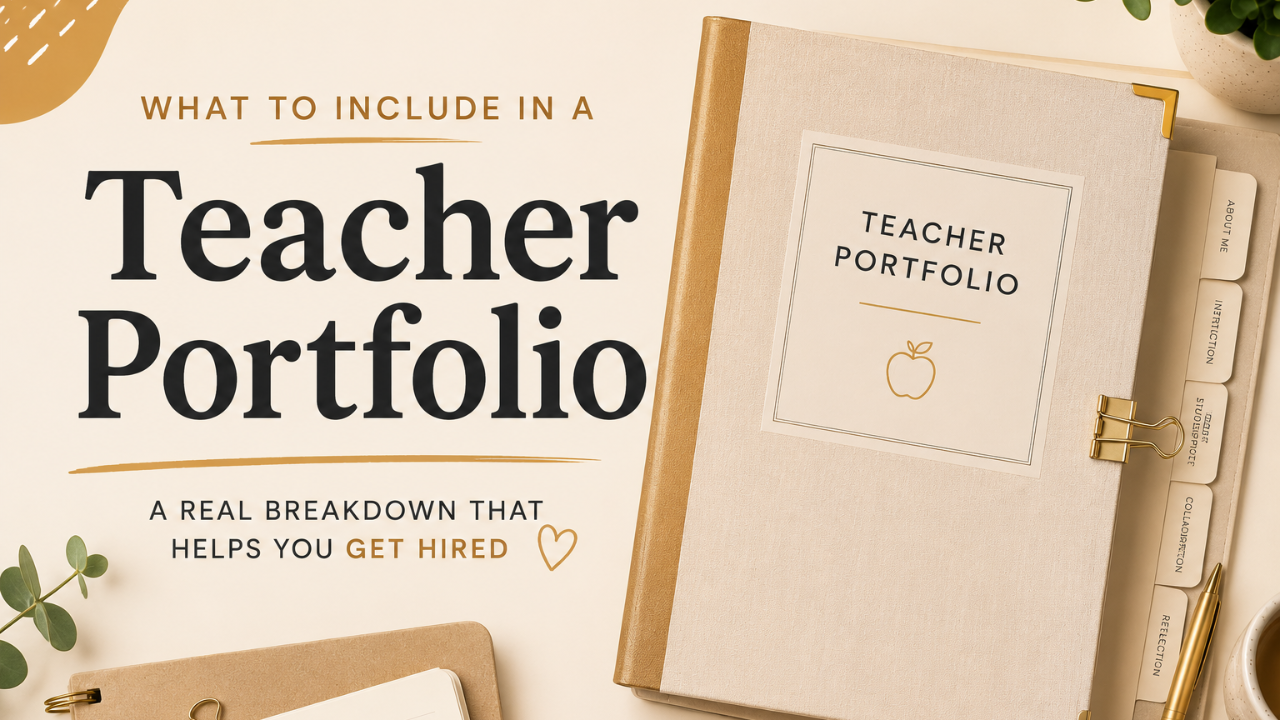
1. A grounded About Me section
Not a fluffy essay or lengthy philosophy of teaching.
Just enough to quickly communicate:
- what kind of teacher you are
- what you value
- what environments you work best in
- how you approach students and learning
This should align with the hiring story you've already established in your resume and application materials.
2. Classroom and instruction examples
This is where hiring teams start seeing how you actually operate.
Things like:
- lesson snapshots
- classroom systems
- engagement strategies
- instructional routines
- project examples
- learning experiences you designed
Not twenty versions of a worksheet.
Curated examples that reveal your thinking.
3. Student support and differentiation
This section matters more than you might realize.
Hiring teams want evidence that you can respond to real students with real needs.
You might include:
- intervention systems
- scaffolding examples
- differentiation strategies
- support structures
- behavior supports
- examples of adaptations
Again, the point is not volume. It's helping someone understand how you solve problems.
4. Communication and collaboration
A lot of teaching happens outside direct instruction.
This section can include:
- family communication examples
- team collaboration
- planning systems
- student support coordination
- cross-functional work with specialists or intervention teams
Especially in strong school environments, people want to know: Can this person work well with others?
Your portfolio can answer that before you even walk into the interview.
5. Reflection and growth
This is one of the most overlooked sections.
Strong teachers iterate.
It doesn't need to be a giant reflection essay. But consider showing:
- how you adjusted something
- what you learned
- how you improved a system
- how student feedback shaped instruction
This signals maturity immediately.
What if you don't have much experience yet?
A lot of teachers assume portfolios are only useful once you've already done impressive things.
That's not true.
Some of the strongest portfolios come from teachers who simply present their thinking clearly.
If you're newer to teaching or changing roles, your portfolio can still include:
- sample lesson experiences
- classroom systems you would use
- mock classroom routines
- behavior support ideas
- communication examples
- instructional strategies
- reflection on student teaching or practicum experiences
Remember, hiring teams are not just evaluating experience.
They're evaluating readiness, intentionality, and how you think about teaching.
A portfolio can be more than just proof of past work. It's also preparation for future work.
Sometimes the process of building the portfolio is what helps teachers finally clarify:
- how they teach
- what they value
- what kind of environment fits them best
Which becomes extremely useful for interview scenarios.
That alone makes the exercise worthwhile.
Portfolio mistakes that hurt teachers
The biggest mistake teachers make is assuming more automatically equals better.
More pages. More artifacts. More graphics. More templates.
But more artifacts do not automatically create more credibility.
Weak portfolios are overloaded with:
- generic philosophy statements
- disconnected materials
- excessive design
- repetitive examples
- random uploads without context
A portfolio should not feel like someone emptied their Google Drive into a slideshow.
It should feel curated, intentional, and easy to understand quickly.
Your portfolio should reinforce your hiring story
At the end of the day, your portfolio has one job:
Help hiring teams picture you successfully working in their environment.
That's it.
It doesn't need to prove you work hard. It doesn't have to showcase every single thing you've ever created. And it shouldn't be about trying to impress people with volume.
Clarity is what makes portfolios memorable.
When your portfolio, resume, cover letter, and interview examples all reinforce the same hiring story, your application starts feeling cohesive instead of scattered.
That's what will make you stand out.
How to share your teacher portfolio
Digital portfolios are usually the easiest option because they're simple to update and easy to share throughout the hiring process.
Teachers often:
- add the portfolio link directly on their resume
- include it in applications
- link it in cover letters
- share it during interviews
- keep a QR code version available
Some teachers also bring a clean printed version to interviews, especially for in-person roles.
The format matters less than the experience of reviewing it.
The goal is to make it easy for hiring teams to quickly understand who you are, how you teach, and why you fit the role.
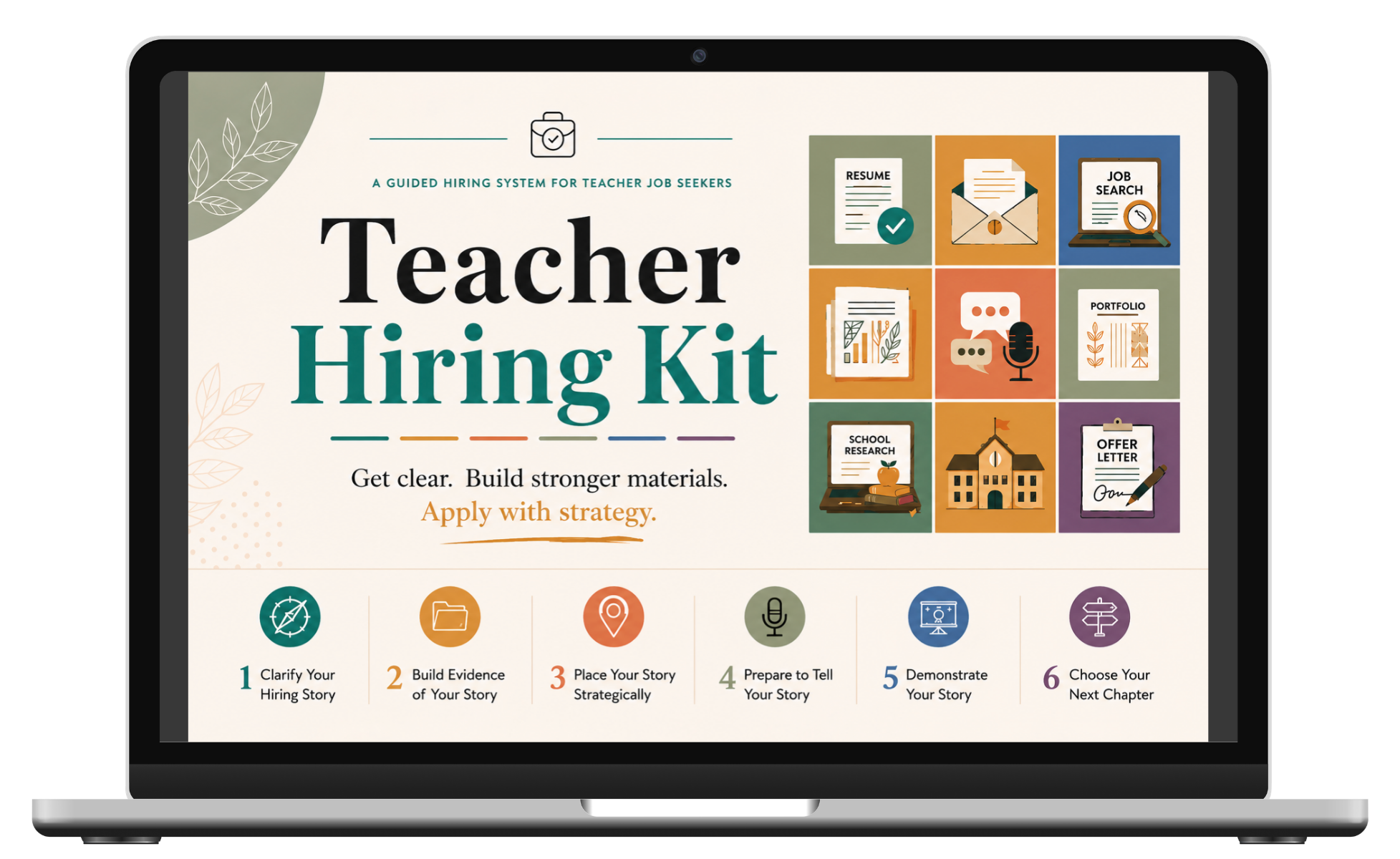
Inside the Teacher Hiring Kit, I walk teachers through how to build a teacher portfolio that supports their hiring story instead of feeling like a random collection of materials.
Strong hiring materials should work together to make your fit obvious.
Ready to build a portfolio that actually supports your hiring story?
👉Check Out the Teacher Hiring Kit
Rethink How You're Doing This Whole Teaching Thing
I create content to help you think like a classroom CEO, not just a teacher.
From job search strategy to classroom systems to experience design, this is where it all starts to click.
No spam. No sharing your info. Just real support in your corner.